You’d think that something as simple as operating an on/off button or switch would deliver predictable results. These days, many electronic devices remain on and continue to draw small amounts of current, even when you think they’re off. Let’s look at how car radios work regarding their on/off status and how much current they draw.
Parasitic Current Draw Kills Batteries
This term should be very familiar to those adept at troubleshooting automotive and marine electrical systems. A parasitic draw is a circuit that consumes energy when you don’t want it to. The concept is similar to leaving the dome light in your car on overnight after searching for something that has tumbled into that abyss between the seat and the center console.
In reality, a parasitic draw consumes energy that’s unexpected or unwanted. You know that something evident like a dome light would kill a battery. If all the lights are off, but your battery is drawn flat in a day, you must address the problem.
Depending on the features included with your vehicle, even when it’s off, systems can draw upwards of 50 milliamps of current. If you have keyless entry, the receiver is awake and listening for a signal from your key fob. If you have a “smart trunk” system, there’s likely a second receiver in the back of the car listening for a signal from your key fob. All radios with clocks draw a tiny current to keep the clock running.
It’s Not Off; It Just Looks Off
Any device with a momentary on/off button has a tiny computer awake and waiting for the signal to spring to life. Your smartphone is a perfect example of this. The power button on the side or back sends a signal to the microcontroller and tells it to wake up. That microcontroller must draw a tiny bit of power from the battery to listen to the signal. This is one reason why devices with rechargeable batteries drain, even when “turned off.”
A desktop or laptop computer is another example. Not only can they be woken by tapping the power button on the case, but many can monitor a physical network port for a command that will bring the system to life. These commands are called Wake on Lan (WOL) and are great if you want to access a computer at home from a remote location.
Car Radios and Parasitic Draws
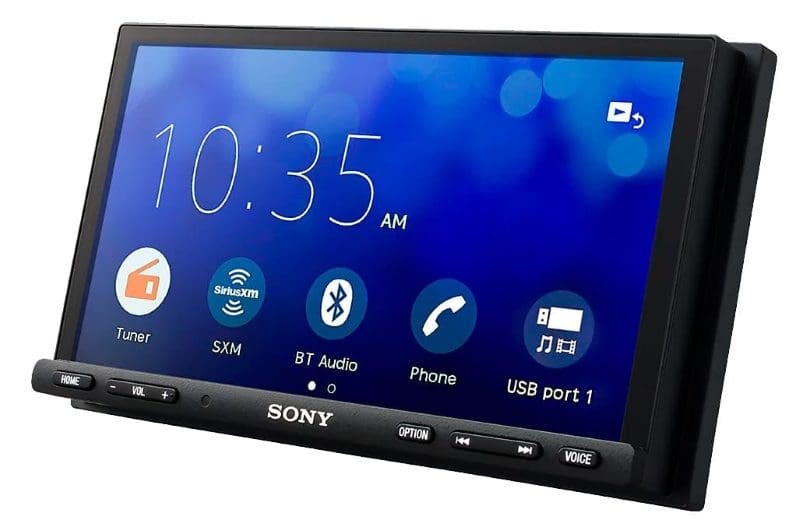
Getting to the point of the article, if your car radio doesn’t have a mechanical on/off switch like you might have found in a twin-shaft radio from the ’70s or early ’80s, it will draw a small amount of current from the battery when you turn it off. A better description of the state your radio is in after you press the power button is “sleep mode.” I measured the current consumption of a Sony XAV-AX7000 multimedia receiver in my lab. When on, but the volume turned down, it drew 776 milliamps of current. Pressing the power button to shut it off dropped the current draw to about 2 milliamps.
Two milliamps isn’t much current. With that said, your battery’s health isn’t good, and going on vacation or a business trip for a week will affect how much energy is left to start the vehicle. On the other hand, a remote car starter with a two-way remote can draw 15 to 20 milliamps of current. A dashcam might draw upwards of 400 milliamps when in parking mode, which could kill a weak battery overnight.
If you’ve ever looked at the wiring for a typical car or marine radio, you’ll know there are two “power” connections. A yellow wire typically needs to be connected to a constant power source. This wire is what feeds power to the microcontroller in the radio. A red wire should be connected to a switched power source. This wire is usually labeled as “accessory,” and the power source it is connected to should only be live when the ignition is in the accessory or on/run position. This wire typically only provides a signal to the microcontroller and doesn’t provide significant amounts of current to anything in the radio.
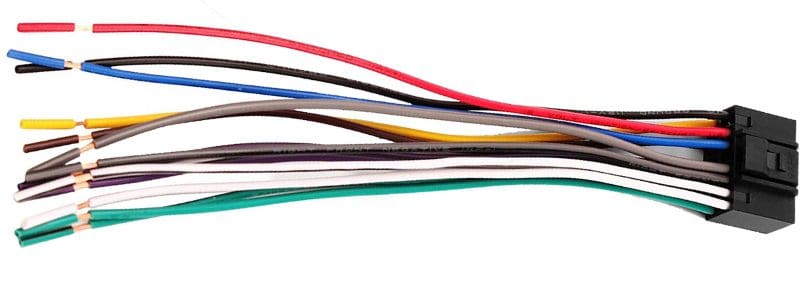
When no voltage is applied to the red wire, the radio “turns off.” Once again, this can be misleading because the yellow wire still provides a small amount of current to let the microcontroller monitor the red wire for a signal. We can consider this something akin to a “deep sleep” mode. Electronics manufacturers often refer to this measurement as the Dark Current.
The same Sony radio dropped its current draw to about 300 microamps when the power was removed from the red accessory wire. This current draw performs much better than radios from a few decades ago.
Car audio amplifiers, signal processors and integration interfaces also have small amounts of dark-current draw.
Marine Radios and Parasitic Draws
A little over a decade ago, Clarion introduced a marine radio solution with only two power wires: red and black. The radio was designed to include memory that would retain settings when power was removed from the unit. Items like station presets and equalizer and crossover settings would be retained when you turned on the boat. In a conventional marine radio with three power wires (constant, accessory and ground), radios would forget settings if you removed power from the yellow wire.
Parasitic draws are a concern in marine applications because most boats are only used on weekends. You roam around the lake or river for a few hours Saturday and Sunday, then tie the boat up at the dock for the week. That draw from the radio over the week would dramatically lower battery reserves, and the limited run time over the weekend wouldn’t recharge them fully. Boat batteries don’t last very long as they are often drained heavily and only partially recharged.
The solution is two-fold. If you plan on upgrading the radio in your boat, see if you can find a radio that uses a two-wire connection. One wire would be ground, and the other goes to the accessory or radio circuit. When you turn off the boat, no power is drawn from the battery.
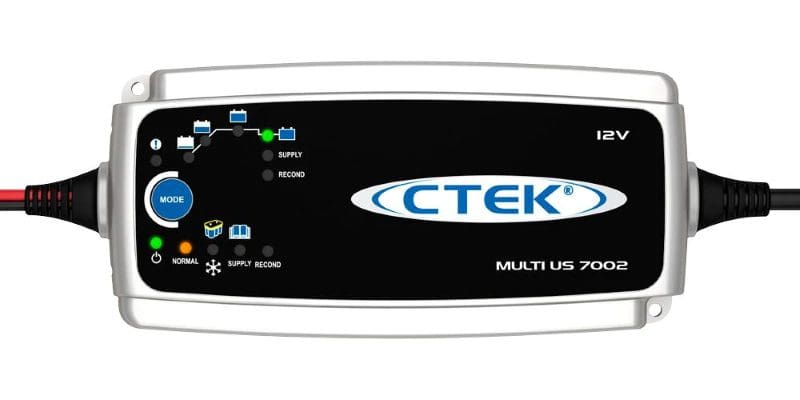
Second, purchase a battery charger for your boat. It can be as simple as a Battery Tender Junior or a premium solution like the CTEK Multi US 7002. We’ve had phenomenal success with the latter; its recondition mode has restored the chemistry and capacity of batteries that less advanced changers and vehicle alternators couldn’t bring back to life. Whatever you decide to use, make sure it’s an intelligent unit that knows when the battery is full and switches to a float mode to prevent the battery from being overcharged.
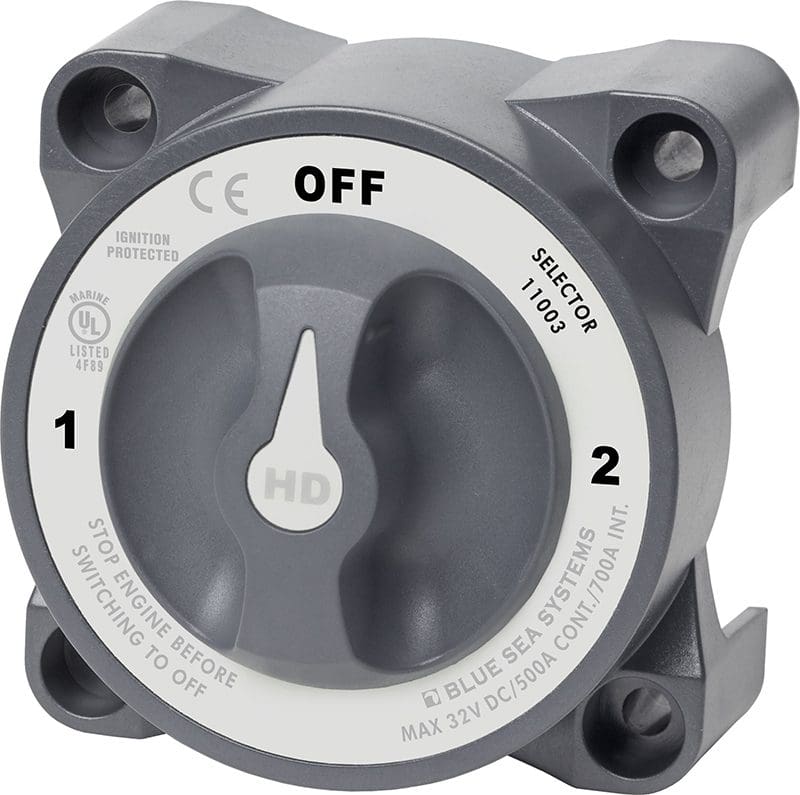
You can also have a professional install a master battery switch in your boat. This switch makes disconnecting the battery easy if you’re going home from the cottage for the work week.
If your application uses Absorbed Glass Mat (AGM) or some Valve Released Lead Acid (VRLA) battery, your charger should have a specific charging mode for this type. These batteries rest at a slightly higher voltage than conventional lead-acid units. Sorry, we get a little geeky when talking about batteries. Regardless, proper maintenance is crucial to their longevity and reliability. Can you imagine the frustration of heading out on the lake for an afternoon of fun, only to be left stranded because the battery is too dead to restart the motor? What a mess!
Have Parasitic Power Draws Resolved Quickly
If you’ve run into a situation where the battery in your car, truck, boat, side-by-side or motorcycle constantly dies, you likely have a parasitic power draw. A local specialty mobile enhancement retailer can help troubleshoot the system with a current clamp or thermal imaging camera. Once they pinpoint the issue, they can repair or replace the misbehaving component, fix a wiring issue or devise a solution to ensure that your battery won’t die when you’re ready to head to work or school. It could be as simple as something wired incorrectly by an amateur or the incorrect selection of an aftermarket upgrade. Either way, you don’t want your car radio killing your battery.
This article is written and produced by the team at www.BestCarAudio.com. Reproduction or use of any kind is prohibited without the express written permission of 1sixty8 media.
